English

Places to visit in Japan (that are NOT Tokyo or Kyoto)
You've probably heard of Kyoto and Tokyo before, and while these two cities are quintessential Japanese cities, there are many lesser-known gems that can also offer a rich cultural experience, especially if you have some extra time to explore. Discover some of them here:
The Lavender Fields of Furano, Hokkaido
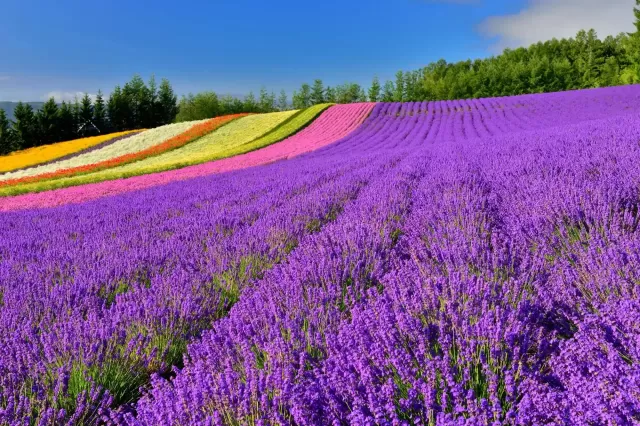
While Hokkaido is famous for its snowy winters, its summers unfold a spectacle of color and fragrance. In the Furano region, lavender fields transform the landscape into a sea of purple that contrasts beautifully with the green mountains and the blue sky. It's the perfect escape from the humid heat typically found in Japan during this time of year.
One place you absolutely mustn't miss is Tomita Farm, a very traditional lavender field. With over a century of history, this farm is a floral paradise where lavender takes center stage, but that doesn't mean you won't find other types of flowers. The contrast between the violet of the lavender and the other blooms lends a dreamlike touch to the landscape.
Tips for planning your visit:
- Ideal time: The perfect window is from late June to early August. The peak of flowering, when the color and aroma are at their most vibrant, is usually in mid-July.
- Access: Furano is accessible by train from Sapporo. Once there, local transport or organized tours will take you to the fields.
- Key fact: Visiting Tomita Farm is completely free!
Kusatsu Hot Springs, Gunma
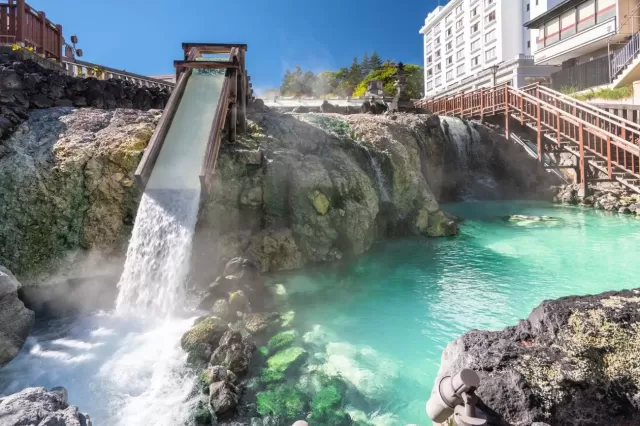
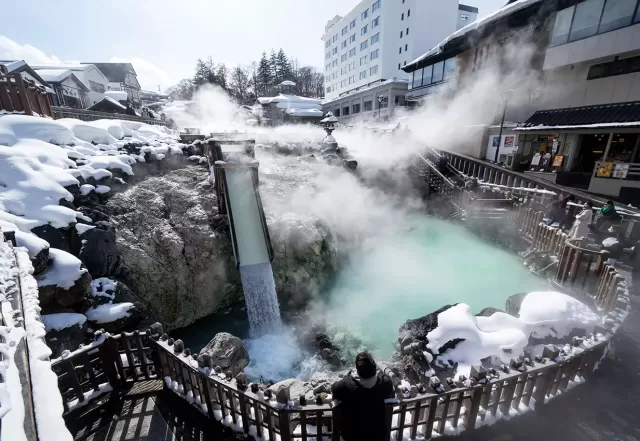
Japan is world-renowned for its hot springs, also called onsen . One of the country's most famous hot spring resorts is perhaps not as internationally known: Kusatsu Onsen . Located at an altitude of 1,200 meters in Gunma Prefecture, this town nestled among volcanoes boasts a history dating back almost 2,000 years. It offers skiing in winter, hiking in the warmer months, and year-round relaxation in its hot spring waters.
The symbol of the village is Yubatake ("hot spring field"), the main hot spring that supplies thousands of liters of mineral water per minute to the ryokans (traditional inns) in the area. Its wooden structure, through which the steaming water flows, is a fascinating sight, especially when it is illuminated at dusk.
Tips for your visit:
- How to get there: Kusatsu, a town of about 6,000 inhabitants, does not have a train station. It is accessible by bus from Naganohara-Kusatsuguchi Station, approximately 2.5 hours from Tokyo by express train.
- Experience: In addition to bathing in the waters (which are said to have healing properties), be sure to witness the "yumomi", the traditional method of cooling the water with wooden paddles (which if you like Japanese cinema you have probably been able to appreciate before), accompanied by folk songs.
Naoshima Island
In the Seto Inland Sea, Naoshima Island (Kagawa Prefecture) has transformed into an epicenter of cutting-edge art and architecture. With a Mediterranean ambiance, tranquil beaches, and a relaxed pace of life, it's the ideal retreat for lovers of culture and tranquility.
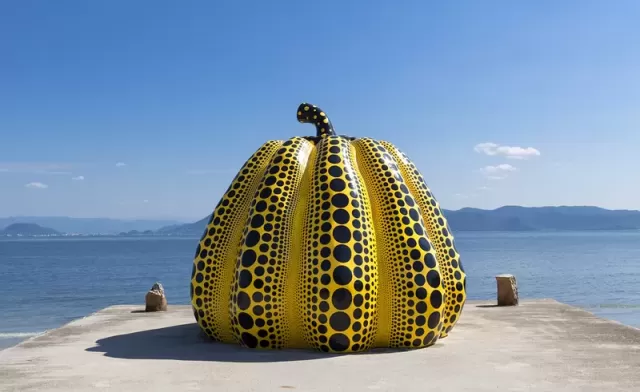
Despite its small size (just 8 km²), the island is home to works by world-class artists and architects. You can find everything from Yayoi Kusama 's iconic pumpkins to James Turrell 's light installations and concrete buildings that are works of art in themselves, designed by architect Tadao Ando . The island is one of the main venues for the Setouchi Triennale art festival. If you have the chance, you can explore the island by bicycle and leisurely discover the artworks and museums.
The Otaru Canal, Hokkaido
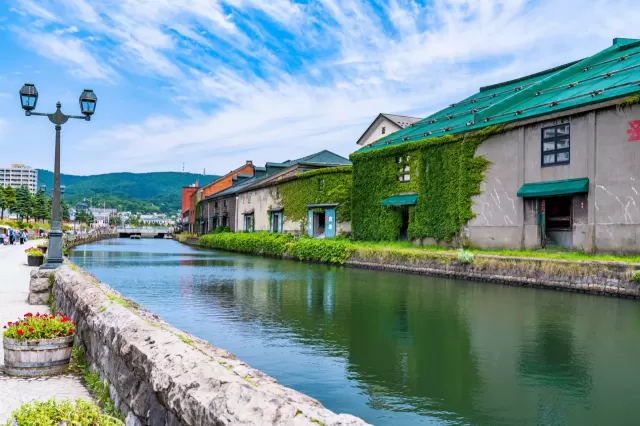
Travel back in time with a stroll along the Otaru Canal (Otaru Unga) in Hokkaido. This canal was a bustling and important area during the Meiji and Taisho eras. Today, the old stone and brick warehouses lining the canal have been renovated into restaurants, cafes, and shops. If you visit in February, you can experience the Snow Light Path Festival, where the canal and town are adorned with candles and ice sculptures. Wondering how to get there? Otaru is just a 30-minute train ride from Sapporo.
Mount Koya (Koyasan), Wakayama: The Spiritual Heart
Immerse yourself in Japanese spirituality at Mount Koya (Koyasan) , the world center of Shingon Buddhism, founded by the monk Kobo Daishi (Kukai) in 816. This sacred complex, accessible by a picturesque cable car, houses more than 100 temples.
The most profound experience is staying at a shukubo (temple guesthouse), where you can participate in morning prayer ceremonies and sample vegetarian Buddhist cuisine (shojin ryori). The most impressive site is Okunoin , Kukai's mausoleum, where a 2-km path lined with hundreds of thousands of ancient tombstones and monuments, beneath giant cedars, creates an atmosphere of profound peace and mysticism.
More tips:
- How to get there: From Osaka, take a train to Gokurakubashi Station and then the cable car up the mountain.
- Live a unique experience: Spending the night in a temple is an authentic and highly recommended experience.
Nachisan Seiganto-ji Temple, Wakayama
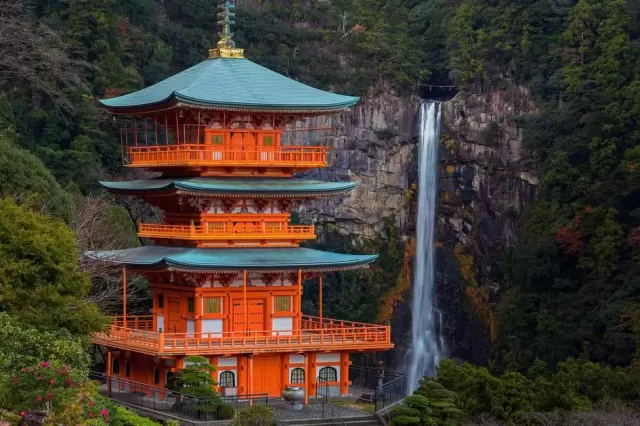
In the same Wakayama Prefecture, within the sacred Shrines and Pilgrimage Routes of the Kii Mountains (a UNESCO World Heritage Site), lies Nachisan Seiganto-ji Temple . This temple, considered the oldest structure in Kumano, is an important cultural heritage site.
Its fame, however, also stems from its stunning natural setting: from its location, one enjoys an unparalleled panoramic view of Nachi Falls (Nachi no Taki) , the waterfall with the greatest vertical drop in Japan. The image of the temple with the waterfall in the background is iconic and one of the most recognizable images of the country.
