English

What to see in Xi'an: The Ultimate Guide to Discovering China's Ancient Capital
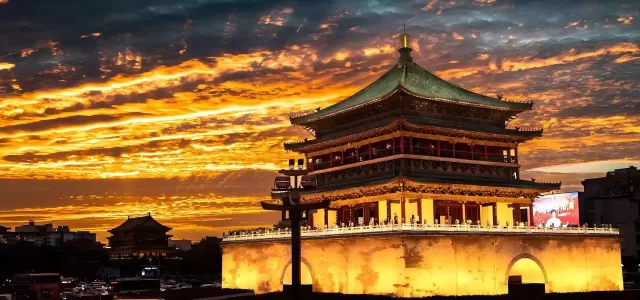
In northwest China, far from the bustling coastal cities of Shanghai or Beijing, lies Xi'an, a city characterized by its rich historical legacy, reflected in its architecture and cultural heritage. For travelers seeking to experience, see, and learn about the millennia-old history of ancient Chinese dynasties, Xi'an is a must-see destination. It was the capital of 13 consecutive dynasties, including the powerful Qin, which first unified China under Emperor Qin Shi Huang, and the prosperous Western Han, a pivotal period of cultural and economic development.
What to see and what to do
Xi'an City Wall: A Walk Through History
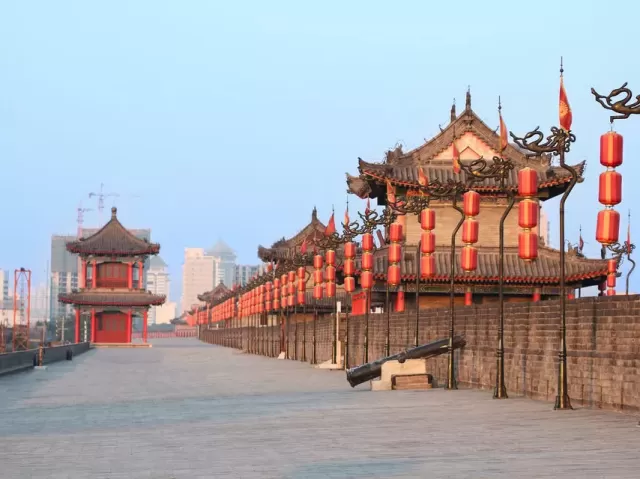
One of the first sights that will greet you in Xi'an is its imposing Ancient City Wall. This colossal, incredibly well-preserved defensive system encircles the city center and is a tangible testament to the engineering and urban planning of ancient China. Built over 600 years ago under the reign of Emperor Zhu Yuanzhang, its existence allows you to grasp the scale and importance of an imperial capital.
The most common way to explore it is by bicycle. Pedaling at your own pace along this cobblestone path offers a unique and ever-changing perspective: on one side, the modern bustle of the city, and on the other, the traditional rooftops and tranquil courtyards of the old town. If you prefer a more leisurely pace, you can opt for a walk or use the convenient electric tram.
The Giant Wild Goose Pagoda:
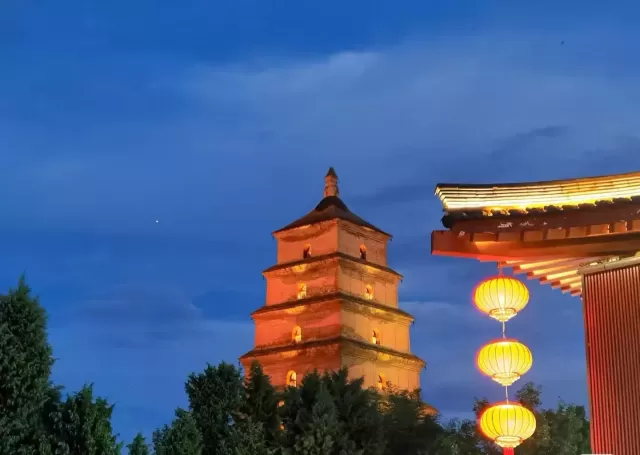
Rising into the southern sky above Xi'an, the Great Wild Goose Pagoda is an icon of Chinese religious architecture. Over 1,300 years old, it is the largest and oldest surviving square brick pagoda in the Tang Dynasty style in the country. Its structure, both simple and majestic, reflects the profound influence of Buddhism in the region during that historical period.
From the upper floors, you get a spectacular panoramic view of Xi'an. The pagoda is linked to the figure of the monk Xuanzang, who traveled to India and returned with Buddhist scriptures that were translated and stored in this very building.
The City Centre: The Bell Tower and the Drum Tower

In the very center of the old capital stands the Belfry. This iconic wooden structure, which has stood for over six centuries, originally served to announce the time to all citizens. Today, it functions as a museum housing cultural relics and traditional works of art. At night, its illumination transforms it into a spectacle of unique beauty.
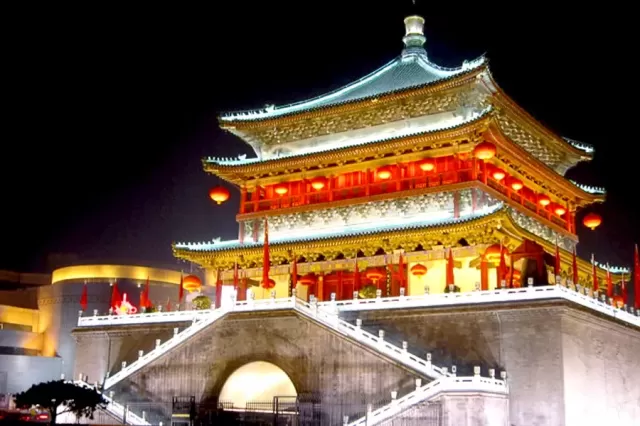
Just 200 meters away, a similar building, the Drum Tower, completed the function of marking time. While the bell announced the dawn, the drum signaled dusk. Today, it also houses cultural exhibitions. Visiting both towers gives you a comprehensive understanding of daily life in Imperial China and allows you to enjoy a unique panoramic view from their heights.
The Great Mosque of Xi'an:
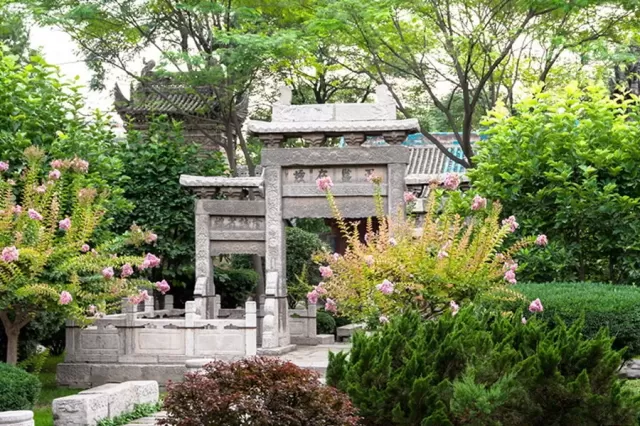
One of Xi'an's most fascinating sites is its Grand Mosque. Located just a short walk from the bustling Muslim Quarter, this sanctuary is a sublime example of cultural fusion. Unlike the domed mosques and minarets typical of the Middle East, this one was built in a purely Chinese architectural style, resembling a traditional Buddhist temple. The pavilions, courtyards, and lush gardens create an atmosphere of absolute tranquility, a haven of peace far removed from the hustle and bustle of the streets. Its existence is a living testament to the historic Hui Muslim community that settled in Xi'an thanks to the Silk Road.
The Terracotta Army: The Eighth Wonder of the World
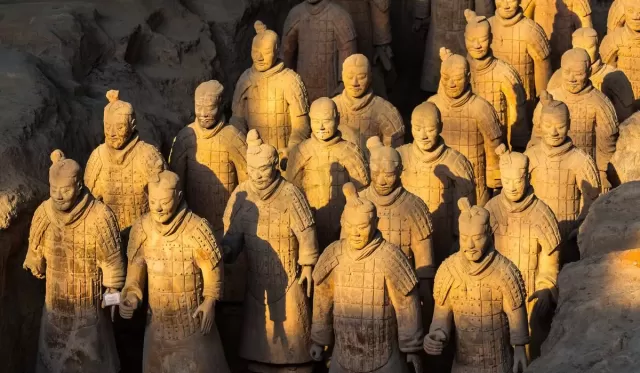
About 40 kilometers from the city center lies one of the most important archaeological discoveries of the 20th century: the Terracotta Army of Emperor Qin Shi Huang. Rightly called the eighth wonder of the world, the site will leave you breathless.
Discovered by chance by farmers in 1974, this vast army of thousands of life-size soldiers, horses, and chariots was created to accompany and protect the first emperor in the afterlife. Most astonishing is that each warrior's face is unique, displaying a variety of expressions, hairstyles, and military ranks. Walking through the pits and contemplating this silent legion is a breathtaking experience that connects directly to the ambition, power, and obsession with eternity of ancient China.
The Muslim Quarter: A Feast for the Senses
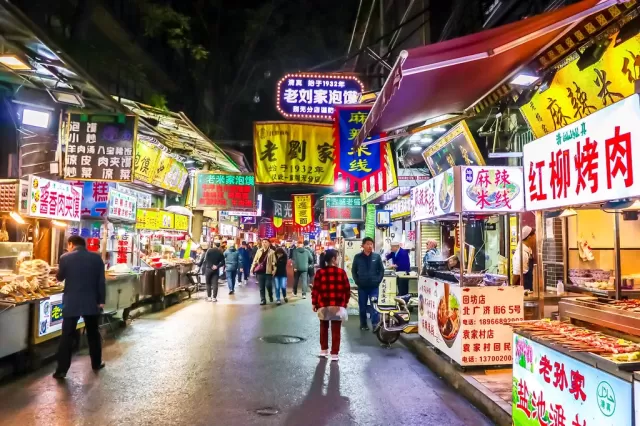
After so much history, your visit to Xi'an should culminate with the unique culinary experience that the Muslim Quarter has to offer. Don't let the name fool you; all kinds of Chinese food can be found there, and it's exclusively halal. The aroma of spices and grilled meat fills the air. Here you can try delicious local specialties like yangrou paomo (lamb soup with breadcrumbs), grilled lamb skewers, or sweet nut pastries. It's the perfect place to dine, buy souvenirs, and immerse yourself in the vibrant and authentic local life.
Xi'an's Climate and Best Time to Visit
Xi'an enjoys a continental monsoon climate with four distinct seasons. Spring (March to May) and autumn (September to November) are generally the best times to visit. During these seasons, the weather is mild and pleasant, perfect for exploring outdoor sites like the Great Wall and the Terracotta Army. Spring brings the cherry and magnolia blossoms, while autumn paints the landscapes with warm hues. Summers can be hot and rainy, and winters cold and dry. You can visit year-round if you have a good tolerance for a dry winter or high summer temperatures.
